

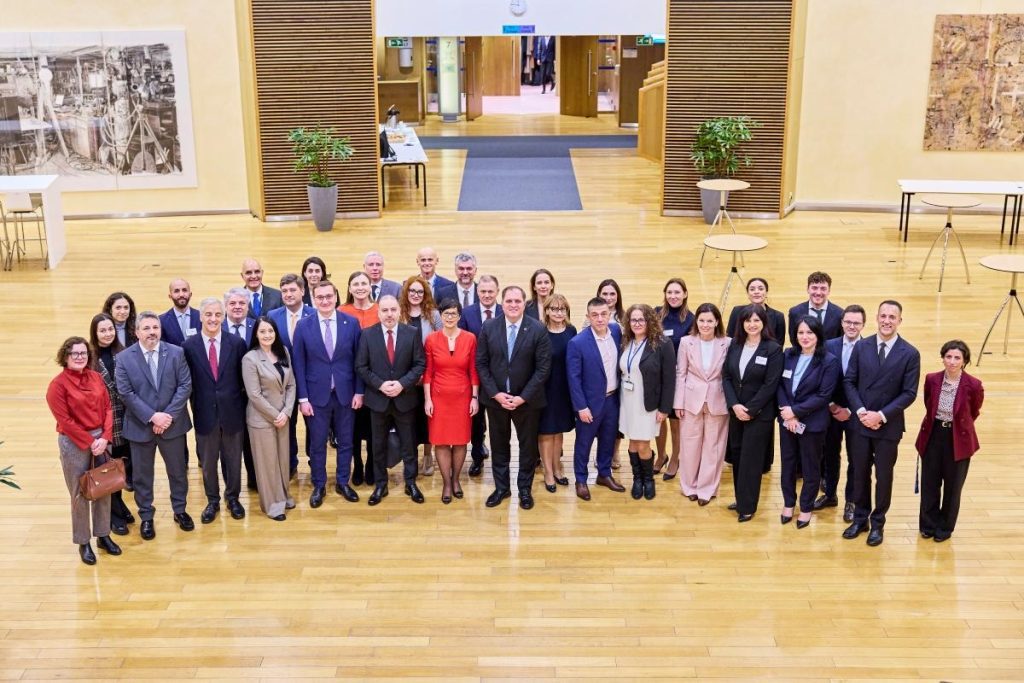
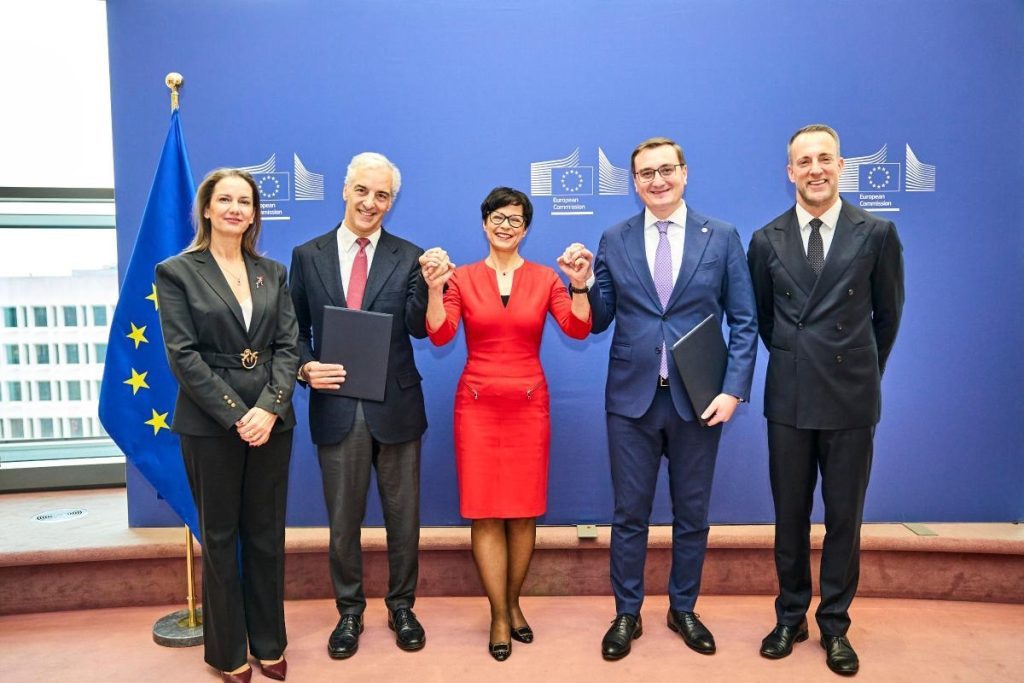
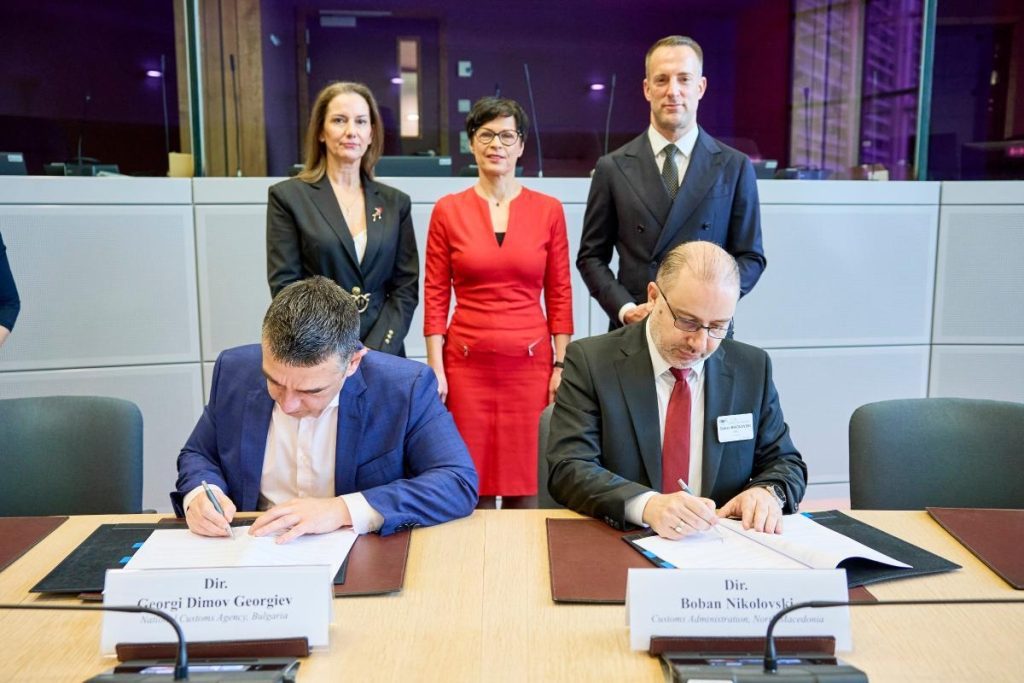
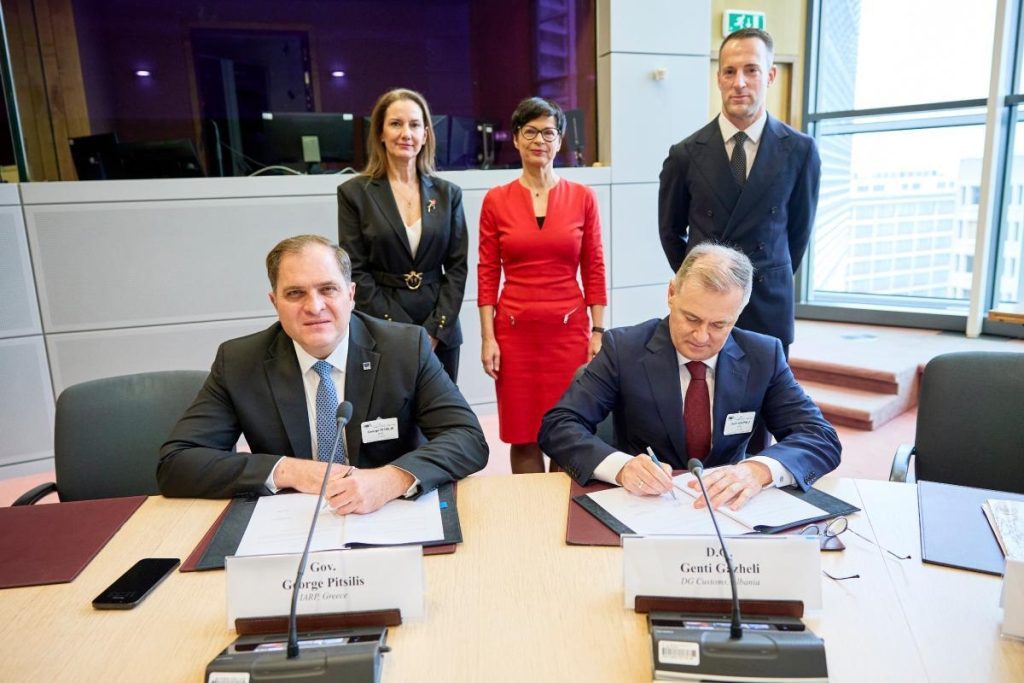
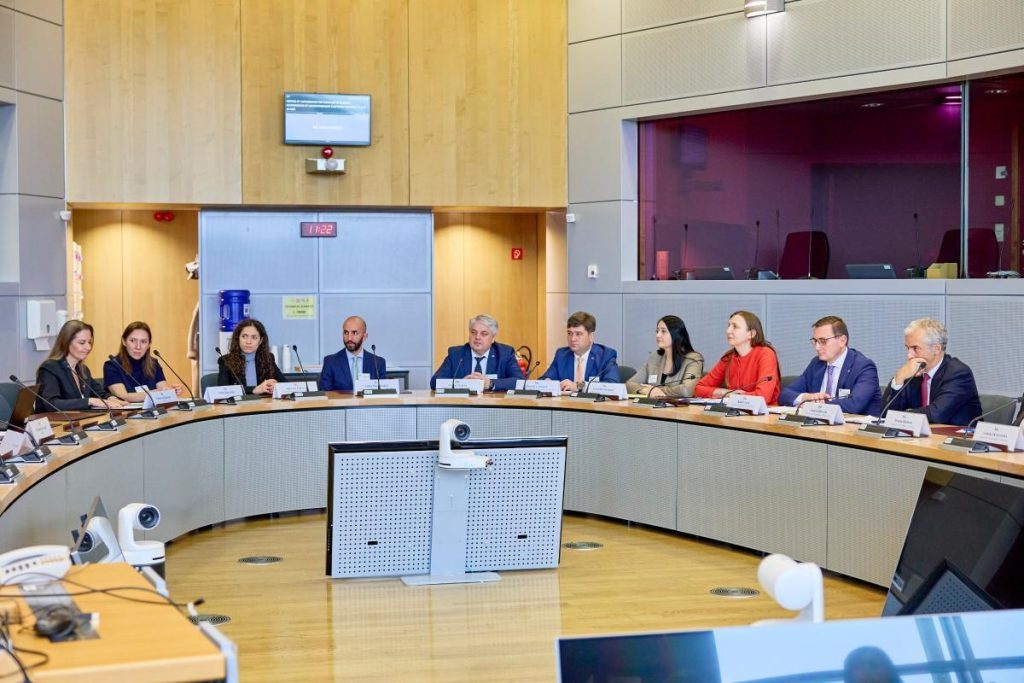
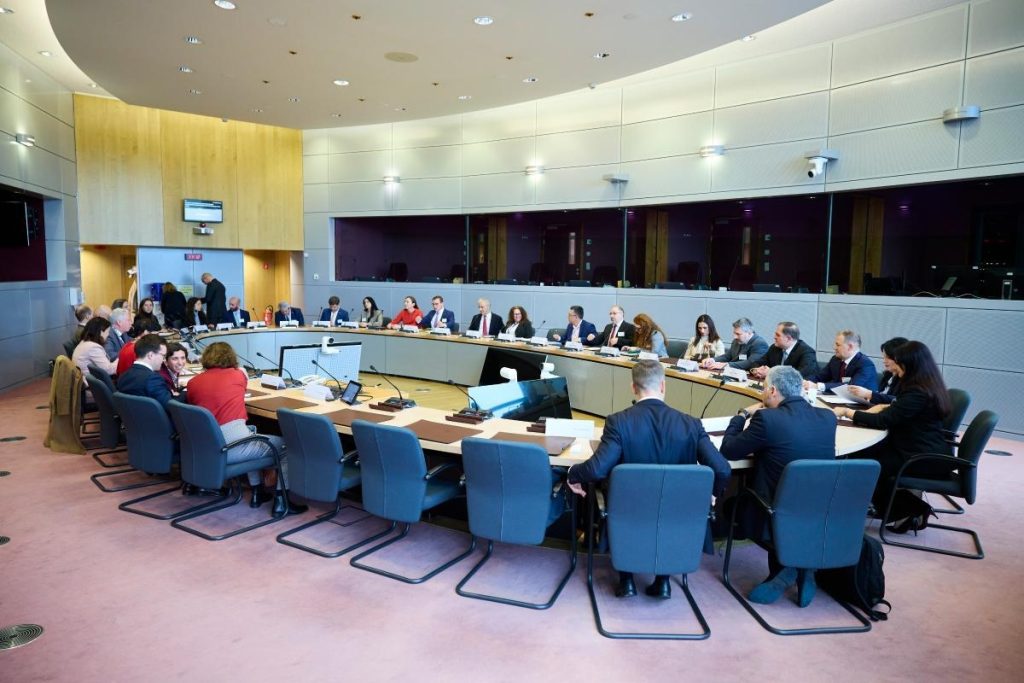
BRUSSELS – As part of the EU–Western Balkans Summit, customs administrations from the Western Balkans and EU member states signed a series of bilateral Memoranda of Understanding (MoUs) on the electronic exchange of customs data in the framework of the EU–Western Balkans Green Lanes initiative led by the Central European Free Trade Agreement (CEFTA) and Transport Community secretariats. The signing ceremony took place at the European Commission’s Berlaymont building, in the presence of the Commissioner for Enlargement, Marta Kos.
The MoUs take forward the implementation and geographical extension of Green Lanes, supporting the gradual integration of the Western Balkans into the EU Single Market. They provide the legal and technical framework for advanced, one-way electronic exchange of customs information on consignments destined for the EU, enabling customs and other authorities to carry out risk analysis and clearance procedures prior to the arrival of goods at crossing points.
This approach contributes to reduced waiting times, increased predictability for economic operators, and more efficient management at crossings points, while strengthening inter-agency cooperation and trust between the EU and partner administrations.
The agreements signed include bilateral MoUs between Albania and Greece, and North Macedonia and Bulgaria. In addition, an MoU on customs cooperation was signed between Moldova and Italy.
The signatures constitute a concrete deliverable under the Green Lanes Roadmap and complement the recently approved €54 million EU support package for the modernisation of 16 priority crossing points in the Western Balkans. Together, these measures support the implementation of EU standards in customs and management at crossings, as well as the wider objectives of connectivity, trade facilitation, and resilience.
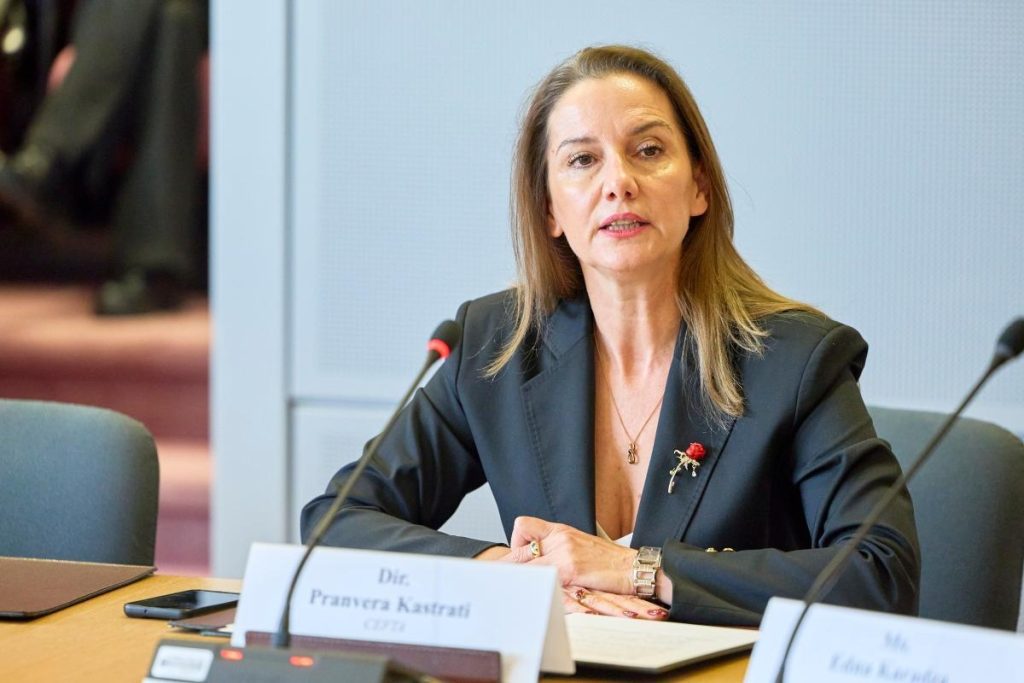
Ms Pranvera Kastrati, Director of the CEFTA Secretariat, underlined the importance of the initiative for businesses. “Green Lanes are delivering what businesses need most: speed, certainty, and seamless trade between CEFTA and the EU, powered by digital solutions and closer EU integration,” she said.
Mr Matej Zakonjšek, Director of the Permanent Secretariat of the Transport Community, noted that the Green Lanes have become a symbol of what is possible when practical necessity meets political priority, supported by expertise and genuine cooperation. “From the days of the COVID-19 pandemic, when the Green Lanes were literally lanes of life, today, they stand for a comprehensive modernisation of border procedures and infrastructure,” he pointed out.
The ceremony brought together customs directors from the signatory administrations, alongside representatives of the European Commission, the Central European Free Trade Agreement (CEFTA), and the Transport Community Permanent Secretariat. It reaffirmed the shared commitment to closer regional cooperation, digitalisation of procedures at crossing points, and the practical implementation of agreed reforms.
Initially introduced during the COVID-19 crisis to ensure the uninterrupted movement of essential goods, Green Lanes have since evolved into a structured framework for modern, interoperable, and data-driven management at crossings between the EU and the Western Balkans. The newly signed MoUs further strengthen this framework by translating political commitments into operational arrangements with direct benefits for businesses, transport operators, and citizens.
CEFTA and Transport Community and will continue to support the implementation of these agreements, including through technical assistance, coordination among authorities, and monitoring of progress, to ensure the effective delivery of Green Lanes as a key tool of EU–Western Balkans connectivity.
Learn more about the Green Lanes initiative in the EU-Western Balkans Green Lanes Initiative Crossing Points Fiches Explanatory Note (Green Lanes Initiative Intra-CEFTA Crossing Points Fiches and EU-Western Balkans Green Lanes Initiative) and the Comprehensive Roadmap for Enhancing Green Lanes, Improved Customs Cooperation and Modernisation of Border/Common Crossing Points.